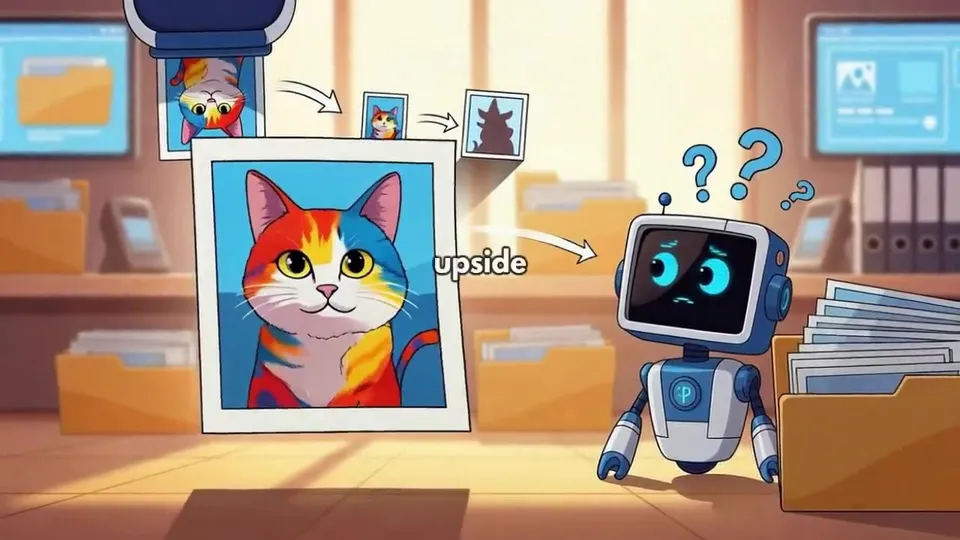
Mission 1 of 5 · about 30–38 minutes
Picture Clue Patrol: How Does AI See?
Who you will meet
- Maya
- Pip
- Glitch



Here is the plan
- Mission hookA question that makes you curious.
- Watch the missionThe film introduces the big idea.
- Concept cardThe idea again, in clear words.
- Guided activityYour turn to play with it.
- Your own missionMake something without help.
- QuizCheck what you discovered.
For grown-ups and tutors
What this lesson teaches
- Define image classification in child-friendly language.
- Use at least two visible features to justify a category.
- Choose “Unsure” when evidence is incomplete and explain why.
Adapting for other ages
use only picture cards and oral explanations.
compare a hand-written rule with a real classifier and discuss confidence scores.
Mystery Picture Sort away from the screen
- Place Cat, Dog and Unsure category cards on a table or screen.
- Sort six clear animal cards and name one visible clue for each.
- Sort six tricky cards containing shadows, costumes, partial views or unusual angles.
- Move weak-evidence cases to Unsure rather than forcing a guess.
- Write one rule that would help Pip avoid a repeated mistake.
Independent mission, as written for you
Give the learner a new animal image. Require the sentence: “I chose ___ because I noticed ___ and ___.”
What your child did
The learner practises evidence-based sorting and learns that computer vision can be useful without being perfect.